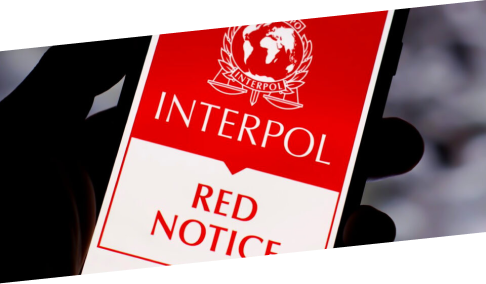
An Interpol Red Notice is a crucial tool for international cooperation among law enforcement agencies, and its use significantly impacts the legal system of any country, including Norway. Let’s explore what Interpol is, how Interpol Red Notices work, and how Norwegian law enforcement interacts with these international requests. We’ll also discuss how our legal services can assist clients dealing with Interpol Red Notices, including issues related to extradition and getting notices removed.
The short version for Norway, before the detail below.
Question
Position
Is an INTERPOL Red Notice an arrest warrant?
No. It is a request to locate and provisionally arrest, and it must rest on a warrant or court order issued by the requesting country.
Who decides whether to act on it in Norway?
Norway’s own authorities, applying national law. INTERPOL has no enforcement powers and cannot compel any member country to arrest.
Can an alert exist without appearing anywhere public?
Yes. Only a portion of Red Notices are published, and diffusions — alerts sent directly between national bureaus — are never published at all.
How do I establish what INTERPOL holds about me?
Through a data access request to the Commission for the Control of INTERPOL’s Files. A public search cannot rule anything out.
Where is the alert itself challenged?
Before the CCF, which decides on documents alone — no hearing, and no internal appeal from its decision.
Does deleting the notice end the case?
No. The warrant or prosecution in the requesting state stands on its own and has to be addressed separately — see Red Notice removal.
What is Interpol?
Interpol, or the International Criminal Police Organization, is one of the largest international organizations dedicated to coordinating the efforts of law enforcement agencies from different countries. Founded in 1923, Interpol acts as a mediator between the law enforcement agencies of its 195 member states, facilitating the exchange of information and coordinating efforts to combat international crime.
The main goals and functions of Interpol include:
Support for international cooperation in combating transnational crime.
Ensuring effective information exchange between law enforcement agencies of different countries;
Creating and maintaining databases containing information on criminals, wanted persons, and international crimes.
What is a Red Notice from Interpol?
An Interpol Red Notice is essentially a request sent by one of the member countries of the organization to locate and arrest an individual for the purpose of extradition. Contrary to popular belief, an Interpol Red Notice is not an international arrest warrant, but rather a call for cooperation that notifies other countries about the need to detain a specific person. The goals and functions of an Interpol Red Notice include:
Notification to member states regarding the search for an individual suspected or accused of committing a crime;
Assisting in the arrest of an individual followed by their extradition to the country that issued the notice.
Providing law enforcement agencies of other countries with information about crimes in which a wanted person is suspected.
Interpol’s Red Notices are issued at the request of a country’s law enforcement agencies if there is substantial reason to believe that the person being sought may be in another country. Interpol reviews such requests for compliance with its rules and procedures, including the observance of human rights, before distributing the notice among its member states.
If you’re on Norway’s Interpol wanted list and you’re in another country, law enforcement has the right to notify the country you’re in and request your arrest and subsequent extradition.
Law enforcement agencies in Norway
Norway has several key law enforcement agencies that interact with international requests, including red notices. The main law enforcement bodies in Norway include:
The Norwegian Police Service (Politiet) is responsible for maintaining public order, investigating crimes, and enforcing court decisions. The Norwegian Police closely collaborates with Interpol and other international organizations, handling requests for arrests and extraditions.
The Norwegian Prosecuting Authority (Riksadvokaten) oversees criminal prosecutions and legal cases, including handling international requests for extradition and executing red notices.
The role of Norwegian law enforcement agencies in processing Interpol requests involves verifying the legality and justification of such requests in accordance with national legislation, international obligations, and human rights. If your information appears on Norway’s Interpol wanted list or there are other conformations of the request’s legitimacy, Norwegian authorities take steps to arrest the individual and proceed with extradition if applicable agreements allow.
Our legal consultations in Norway
When it comes to Interpol’s red notices in Norway, it’s important to understand that each case is unique and requires an individual approach. Our legal services in Norway include:
Consultations: We provide professional advice on red notice issues, analyze the situation, and develop a defense strategy.
Legal Assistance: We provide comprehensive legal support throughout interactions with law enforcement agencies, including defending our client’s interests in court and with governmental bodies.
Representation: We represent our clients’ interests at all stages of the case, including negotiations with authorities, document preparation, and participation in court proceedings.
Our specialists have a high level of expertise in international law and understand all the nuances of working with Interpol’s red notices in Norway.
Extradition
Extradition is the process of transferring a person accused or convicted of a crime from one country to another to face criminal charges or serve a sentence. Extradition under an Interpol red notice is a complex and multi-stage process that requires skilled legal assistance. Our lawyers:
They’re assessing the grounds for extradition and checking compliance with international standards.
They ensure the protection of the client’s rights during the extradition process.
They represent the client’s interests in court and strive for a fair trial.
Gather evidence to justify the illegality or lack of grounds for the notice.
INTERPOL Wanted Lists and Norway: What They Actually Show
Searches for an INTERPOL “wanted list” usually assume there is a single public register that can be checked. There is not, and the gap between what is public and what actually exists is the part that matters.
INTERPOL publishes only a subset of Red Notices on its public site. Many notices are restricted to law enforcement, so a blank result proves nothing about Norway.
Diffusions — alerts sent directly between national bureaus — are never published at all, yet border systems can act on them in the same way.
National police forces sometimes publish their own wanted lists. Those are separate from INTERPOL’s and being absent from one says nothing about the other.
Names can also appear in error, or remain visible after the underlying case has ended, which is itself a ground for correction or deletion.
The only authoritative way to establish what INTERPOL holds about you is a data access request to the Commission for the Control of INTERPOL’s Files. Checking the public Red Notice database is a reasonable first step, but it cannot rule anything out. Where data does exist and should not, the route is a deletion request — see Red Notice removal and our overview of INTERPOL notices for how the colours differ.
What to Do First if You Believe a Notice Names You in Norway
The order of steps matters more than speed. Acting on assumptions — or travelling to test the position — is what turns a manageable case into an arrest.
Establish what actually exists. A data access request to the Commission for the Control of INTERPOL’s Files is the only authoritative answer; public searches cannot rule a notice out.
Identify the requesting state and the underlying warrant or judgment. The alert is only as strong as that foundation, and attacking the foundation is often more effective than attacking the alert.
Assess the specific risk on your route and residence status before any border crossing.
Where arrest is a realistic prospect, ask for provisional measures blocking the data while the challenge is prepared.
Keep any parallel domestic proceedings running — a favourable outcome there frequently removes the basis for the notice altogether.
Grounds for Challenging an INTERPOL Alert Involving Norway
The grounds are set by INTERPOL’s own rules rather than by national law, which is why they are the same wherever the case arises. The ones that succeed most often are:
a political, military, religious or racial character to the case;
a serious risk to fundamental rights if the request is acted on;
a matter that is in substance civil or commercial rather than criminal;
a case already tried or acquitted;
recognised refugee or asylum status;
the absence of a valid judicial basis such as a warrant or court order;
an offence that does not meet the seriousness threshold;
inaccurate, incomplete or outdated data.
Each ground has to be evidenced rather than asserted — the procedure is decided on documents alone, with no hearing. Our guide to Red Notice removal sets out how the access and deletion stages fit together.
Not in the form most people expect. INTERPOL publishes only a subset of its Red Notices on its public site; the rest are restricted to law enforcement, and diffusions — alerts sent directly between national bureaus — are never published at all. National police in Norway may also publish their own wanted list, which is a separate thing entirely. A blank public search therefore proves nothing, and the only authoritative answer comes from a data access request to the Commission for the Control of INTERPOL’s Files.
Is an INTERPOL Red Notice an arrest warrant in Norway?
No. A Red Notice is a request to locate and provisionally arrest, and it has to be based on a warrant or court order issued by the requesting country. INTERPOL cannot oblige Norway to act on one; each member country decides what legal effect to give it under its own law. That distinction is legally important and practically limited — the exposure at a border is real either way.
Are all INTERPOL notices Red Notices?
No, and the colour matters. A Red Notice seeks location and provisional arrest; a Blue Notice seeks information; a Yellow Notice concerns missing persons; a Green Notice warns of criminal intelligence; a diffusion is not a notice at all but a direct alert between bureaus. Each has different consequences and different routes of challenge — our overview of INTERPOL notices sets them out.
On what grounds can an alert involving Norway be challenged?
The grounds come from INTERPOL’s own rules rather than national law: a political, military, religious or racial character to the case; a serious risk to fundamental rights; a matter that is really civil or commercial; a case already tried or acquitted; recognised refugee status; no valid judicial basis; an offence below the seriousness threshold; or inaccurate or outdated data. Each has to be evidenced, because the CCF decides on documents alone — see Red Notice removal.
Can an alert affect banking, work or residence in Norway?
Frequently, and often before anything happens in a criminal court. Compliance screening, employer checks and residence or visa processes can all surface an alert. That is also why an application should ask for the whole data set to be addressed and for written confirmation of what was deleted, rather than just for the notice to be cancelled — residual data is what causes problems to recur.
Did you not find a suitable service on the site or do you need urgent legal assistance from a lawyer?
Order a free consultation!
Address:
3027, Cyprus, Limassol, Vanezis Business Center, Arch. Makariou III Avenue, 4th floor, 171