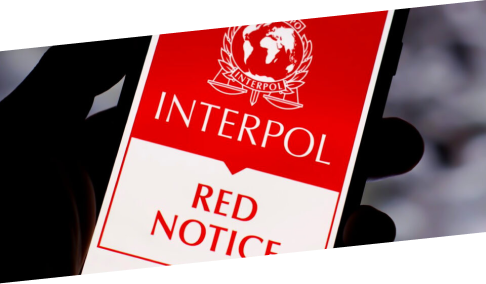
An Interpol Red Notice or extradition request in Dubai can create serious legal and practical problems very quickly. A person may face border checks, police questioning, detention, immigration issues, banking restrictions, business disruption, and possible surrender proceedings.
Dubai is one of the world’s major travel, finance, and business hubs. For that reason, international criminal matters involving the UAE often involve several countries at once: the country requesting the arrest, the UAE authorities, Interpol channels, banks, immigration bodies, and local courts.
Our Interpol and extradition lawyers assist clients in Dubai and the wider UAE with Red Notice checks, CCF applications, Red Notice removal, extradition defence, detention risk, travel-risk advice, and cross-border criminal cases. We help clients understand the legal position before they contact authorities, travel, or respond to a foreign criminal allegation.
The short version for the UAE, before the detail below.
Question
Position
Is an INTERPOL Red Notice an arrest warrant?
No. It is a request to locate and provisionally arrest, and it must rest on a warrant or court order issued by the requesting country.
Who decides whether to act on it in the UAE?
The UAE’s own authorities, applying national law. INTERPOL has no enforcement powers and cannot compel any member country to arrest.
Can an alert exist without appearing anywhere public?
Yes. Only a portion of Red Notices are published, and diffusions — alerts sent directly between national bureaus — are never published at all.
How do I establish what INTERPOL holds about me?
Through a data access request to the Commission for the Control of INTERPOL’s Files. A public search cannot rule anything out.
Where is the alert itself challenged?
Before the CCF, which decides on documents alone — no hearing, and no internal appeal from its decision.
Does deleting the notice end the case?
No. The warrant or prosecution in the requesting state stands on its own and has to be addressed separately — see Red Notice removal.
Interpol in Dubai, UAE
Interpol is the International Criminal Police Organization. It helps police forces in different countries exchange information, access databases, locate wanted persons, and cooperate on serious cross-border crime.
The UAE has been an INTERPOL member since 2 October 1973. Its National Central Bureau is located in Abu Dhabi, not Dubai. INTERPOL explains that National Central Bureaus connect national law enforcement with other countries and with INTERPOL’s General Secretariat through the secure I-24/7 police communications network.
This matters in Dubai cases. A person may be stopped or questioned in Dubai, but the international police cooperation channel operates through the UAE’s national Interpol structure. Dubai Police, UAE prosecutors, immigration authorities, courts, and federal bodies may all become relevant depending on the case.
Interpol cooperation in the UAE may involve:
Red Notices and diffusions;
foreign arrest warrants;
cross-border fraud and money laundering investigations;
drug trafficking and organised crime cases;
cybercrime and financial crime allegations;
terrorism-related investigations;
extradition requests;
asset-freezing or banking-compliance issues.
A Dubai Interpol matter should not be treated as a simple database issue. It may quickly become a criminal, immigration, extradition, and reputational problem at the same time.
Interpol Red Notice in Dubai, UAE
A Red Notice is one of Interpol’s most serious tools. It is a request to law enforcement authorities worldwide to locate and provisionally arrest a person pending extradition, surrender, or similar legal action. It must be based on an arrest warrant or court order issued by the country requesting the notice.
A Red Notice is not an international arrest warrant. Interpol cannot force the UAE, or any other country, to arrest someone. Each country decides what legal value to give a Red Notice under its own laws.
That distinction is important, but it does not make a Red Notice harmless.
In Dubai, a Red Notice may lead to:
airport or border checks;
police questioning;
provisional detention;
passport or immigration issues;
extradition proceedings;
banking and compliance problems;
visa or residence complications;
serious reputational damage.
A person subject to a Red Notice is not “wanted by Interpol” in the strict legal sense. They are wanted by a country or an international tribunal. Interpol provides the international alert system, but the requesting country is responsible for the underlying criminal case.
What are the consequences of a Red Notice?
The consequences of a Red Notice in Dubai can be immediate. A person may only discover the issue when they are stopped at the airport, questioned by police, refused entry, contacted by a bank, or warned by immigration authorities.
The most common risks include:
Detention risk UAE authorities may detain a person while the legal basis of the foreign request is reviewed.
Extradition proceedings The requesting country may submit a formal extradition request after the person is located or detained.
Travel disruption A person may be unable to leave the UAE, enter another country, renew documents, or travel safely through transit hubs.
Immigration problems A Red Notice may affect residence permits, visa applications, entry decisions, and immigration status.
Banking and business issues Banks, compliance teams, investors, employers, and counterparties may react to Interpol-related information or media reports.
Reputation damage Even if the allegation is false, political, or abusive, the notice may affect the client’s name, career, and business interests.
Parallel legal exposure A Red Notice can exist alongside foreign criminal proceedings, UAE court proceedings, asset inquiries, sanctions issues, or civil/commercial disputes.
The key point is that early legal advice matters. Once detention has already happened, the case becomes harder to control.
Extradition in the UAE
The extradition process in the UAE is regulated by both federal law and specific bilateral treaties the UAE has signed with various countries. The UAE government has established clear legal pathways to facilitate the extradition of individuals while balancing international obligations and domestic interests. The process generally requires the requesting country to present a formal extradition request, which is then reviewed by the Dubai court and relevant authorities.
One of the key elements in evaluating a request is the principle of dual criminality. This principle dictates that the act for which extradition is sought must be a crime in both the requesting and the requested country. Thus, if a person is wanted for crimes that are not recognized as offenses under UAE law, the extradition request may be denied.
Extradition from Dubai to the US
Extradition from Dubai to the United States is grounded in a bilateral treaty that outlines the terms under which the two countries will cooperate in matters of law enforcement. Under this treaty, a detailed request must be submitted by US authorities to the UAE government, which is then scrutinized by the appropriate judicial and legal bodies.
The US has robust mechanisms for pursuing extradition requests, particularly in cases involving serious crimes such as drug and human trafficking, neglect of military obligations and severe offenses that may lead to substantial prison sentences. Emirates authorities will consider not only the legal aspects of extradition and the areas of crime but also the potential treatment of the requested or already arrested person in the US judicial system—especially issues relating to human rights and due process.
How Can You Find Out If You’re on the Interpol Dubai Wanted List?
Individuals who wish to determine whether they are on the Interpol wanted list should engage legal counsel familiar with international public law and the specific procedures for checking such statuses. In Dubai, UAE law allows individuals to consult with local law offices or engage directly with Interpol’s public resources to check the status of Red Notices.
Being proactive about checking your status can provide valuable peace of mind, especially for those engaged in cross-border business or travel. Legal experts can assist with navigating the complexities of extradition law and help in understanding the implications of being listed under an Interpol Red Notice.
Removing an Interpol Red Notice in Dubai
There are mechanisms in place for individuals who wish to contest or remove an Interpol Red Notice. This requires a strategic approach, often involving legal representation experienced in both UAE and international law. Successful removal typically demands evidence that the underlying charges are unfounded or that the legal principles that warrant the notice are not adhered to by the requesting country.
Individuals must gather sufficient documentation and possibly appeal to Interpol directly, arguing that the notice violates their rights or is not compliant with the standards established under international human rights law.
Looking for Legal Advice?
For those facing legal issues or the possibility of an Interpol Red Notice in Dubai, seeking qualified legal advice is crucial. Our knowledgeable attorneys specializing in criminal defense and extradition matters will guide individuals through the complexities of federal law, international law, and the specific extradition treaties that may apply to their case.
Legal counsel not only provides assistance in navigating the extradition process but can also help individuals avoid deportation and prevent unjust judicial outcomes. Engaging with a lawyer early can be a significant factor in ensuring one’s rights are protected and can lead to a more favorable resolution of any legal challenges posed by an Interpol Red Notice.
In conclusion, while the Interpol Red Notice is a powerful tool in the fight against global crime, it also presents challenges that need to be managed with care. Understanding the nuances of extradition law in the UAE, particularly in Dubai is essential for individuals who find themselves entangled in international legal issues. Stay informed and give us a call so we can help you solve your high profile extradition cases!
INTERPOL Wanted Lists and the UAE: What They Actually Show
Searches for an INTERPOL “wanted list” usually assume there is a single public register that can be checked. There is not, and the gap between what is public and what actually exists is the part that matters.
INTERPOL publishes only a subset of Red Notices on its public site. Many notices are restricted to law enforcement, so a blank result proves nothing about the UAE.
Diffusions — alerts sent directly between national bureaus — are never published at all, yet border systems can act on them in the same way.
National police forces sometimes publish their own wanted lists. Those are separate from INTERPOL’s and being absent from one says nothing about the other.
Names can also appear in error, or remain visible after the underlying case has ended, which is itself a ground for correction or deletion.
The only authoritative way to establish what INTERPOL holds about you is a data access request to the Commission for the Control of INTERPOL’s Files. Checking the public Red Notice database is a reasonable first step, but it cannot rule anything out. Where data does exist and should not, the route is a deletion request — see Red Notice removal and our overview of INTERPOL notices for how the colours differ.
In the UAE the practical consequence is usually felt at the border or during a residency or employment check rather than through any public listing, which is why the question is normally settled by an access request rather than by searching online.
How do I find an INTERPOL lawyer in Dubai or the UAE?
What matters more than location is whether the adviser can run the two tracks a UAE case needs at once: the challenge to the INTERPOL data itself, which is decided in Lyon rather than locally, and the position on the ground here — residency, employment screening and travel through a major transit hub. In the UAE the consequence is usually felt at a border or during a status check rather than through any public listing.
How do I find out whether an INTERPOL alert names me in the UAE?
Through a data access request to the Commission for the Control of INTERPOL’s Files. That is the only route that produces an authoritative answer: only a portion of Red Notices are published on INTERPOL’s public site and diffusions never appear there, so a blank search rules nothing out. Our CCF application service covers how the request is framed.
On what grounds can an alert involving the UAE be challenged?
The grounds come from INTERPOL’s own rules rather than national law: a political, military, religious or racial character to the case; a serious risk to fundamental rights; a matter that is really civil or commercial; a case already tried or acquitted; recognised refugee status; no valid judicial basis; an offence below the seriousness threshold; or inaccurate or outdated data. Each has to be evidenced, because the CCF decides on documents alone — see Red Notice removal.
Should the alert or the underlying case be attacked first?
Usually both, in parallel. A CCF challenge addresses the INTERPOL data; attacking the warrant or prosecution in the requesting state attacks the foundation the alert stands on, and success there often removes the basis for the notice altogether. Running only one side is the most common reason cases drift for years — see international arrest warrants.
Can an alert affect banking, work or residence in the UAE?
Frequently, and often before anything happens in a criminal court. Compliance screening, employer checks and residence or visa processes can all surface an alert. That is also why an application should ask for the whole data set to be addressed and for written confirmation of what was deleted, rather than just for the notice to be cancelled — residual data is what causes problems to recur.
Did you not find a suitable service on the site or do you need urgent legal assistance from a lawyer?
Order a free consultation!
Address:
3027, Cyprus, Limassol, Vanezis Business Center, Arch. Makariou III Avenue, 4th floor, 171